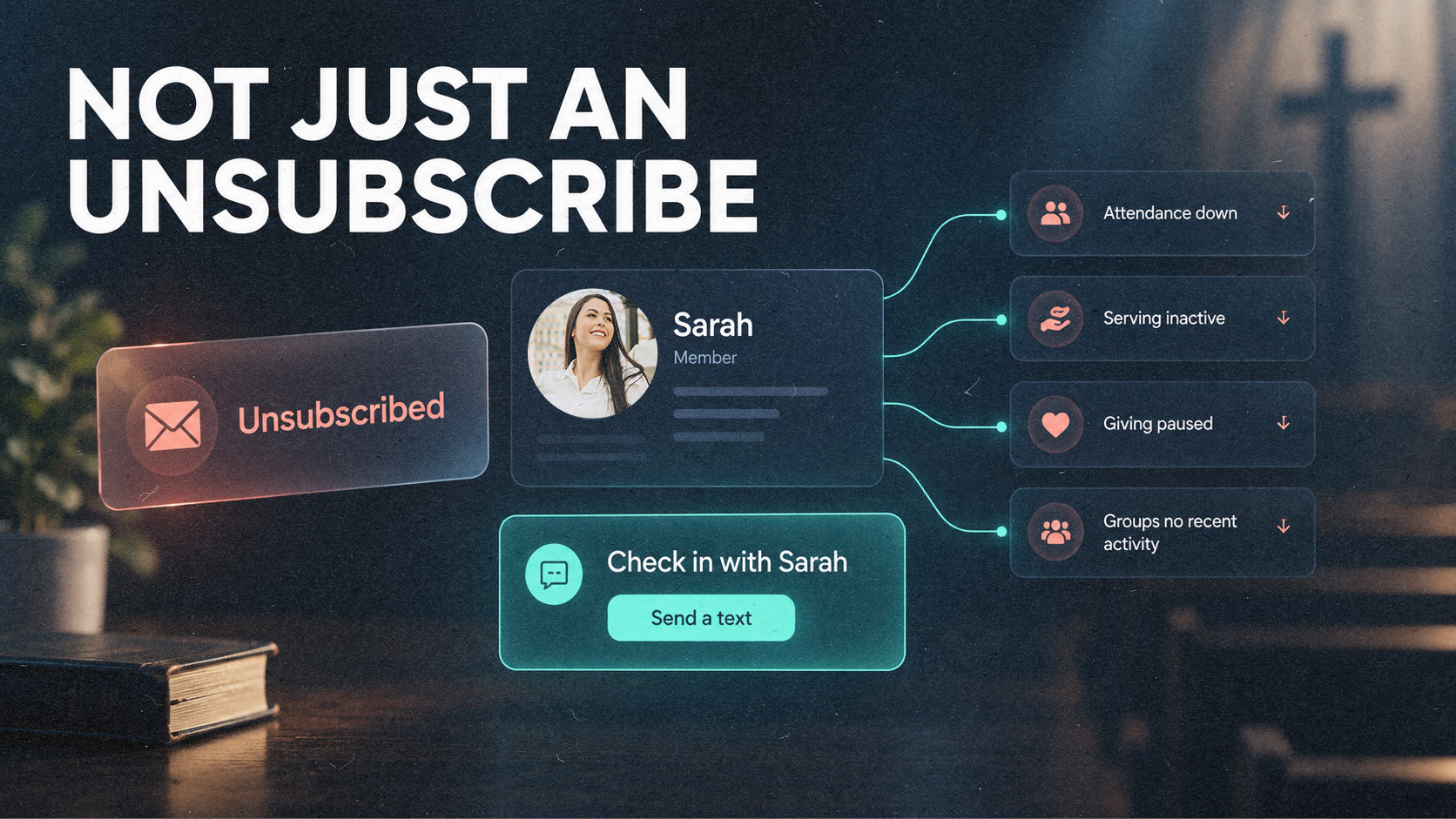

Follow-up needs an owner, a record and an outcome
To know whether church follow-up is happening, every person who needs care needs a named owner, a record of the outreach, and a check on the outcome. Without those three, follow-up depends on memory and good intentions, and leaders learn it was missed only after someone has left.
It's Tuesday staff meeting. You're working down the list of people who need care.
"Did anyone reach out to the Garcias?"
A pause. Then the youth pastor says, "I thought you did." The connections director says she sent an email but isn't sure it was the right address. Someone remembers seeing Mrs. Garcia at the grocery store last month. Nobody is sure whether anyone actually called.
Every executive pastor has been in that meeting. And every one of them has asked the harder question on the drive home: if we're not sure about the Garcias, how many others did we miss?
That question sits at the heart of the Shepherding Gap: the space between when someone starts drifting and when someone on staff finally notices. But there's a second gap inside it. Even after someone notices, there's the space between "we should reach out" and knowing that someone actually did.
Why church follow-up falls through
When follow-up gets missed, it's rarely because your staff doesn't care. Church staff are some of the most caring people you'll ever work with. Follow-up falls through because of how it's organized.
Four patterns show up in almost every church:
- Shared lists with no owner. A list of people who need a call goes out to the whole team. Everyone assumes someone else took it.
- Outreach that lives on personal phones. A pastor texts a family from their own phone. It was a good conversation, and nobody else will ever know it happened.
- No shared record. Without notes, the next person to reach out starts from zero, or reaches out a second time and doesn't know what was already said.
- No outcome check. The task gets marked done when the text is sent. No one checks whether the family came back.
Good staff, missing system. And the larger your church gets, the more those four patterns cost you.
What accountability looks like without micromanaging
Most executive pastors don't want to track every text their team sends. That's not leadership, and it erodes trust. What you need is simpler: the ability to see that care is happening, so you can support your team where it isn't.
Healthy follow-up accountability has three parts.
1. Ownership
Every person who needs care has one named owner. Not a ministry, not a team, not "the care pastors." One person, with a clear timeframe.
2. Visibility
Leaders can see who was reached, when, and what was said, without asking for a report. A short note after each conversation is enough. It protects the person who needs care, and it protects your staff from duplicate or conflicting outreach.
3. Outcomes
Leaders can see whether people re-engaged. Did the family come back on Sunday? Did the volunteer return to the team? Did the giving resume? That's the measure that matters.
Framed this way, accountability is support, not surveillance. It tells your team their work matters enough to see.
Activity is not the same as outcomes
A sent text is activity. A family back in their seats is the outcome.
Most church systems, when they track follow-up at all, track activity: tasks completed, calls logged, emails sent. Those numbers can look healthy while people keep walking out the back door.
Track both. Activity tells you whether your team is reaching out. Outcomes tell you whether it's working. If activity is high and outcomes are flat, the issue is timing or approach, not effort. That's a conversation worth having in your next staff meeting. For more on turning information into action, see The Difference Between Church Data and Church Intelligence.
Most systems stop at insight. Nurture doesn't.
Many church tools can tell you who might need care. Very few can tell you whether care actually happened.
Nurture is built for both halves. It connects the tools your church already uses into one real-time picture of each person and surfaces who is starting to drift. Then it closes the loop:
- A leader assigns follow-up to a specific team member.
- That person gets a mobile notification and can text, email, log a conversation or schedule a meeting without switching tools.
- Leaders see who is following up, what's being said, and whether people are re-engaging.
That last step is the difference. It's how you answer "did anyone reach out to the Garcias?" before the staff meeting, not during it.
What happens when follow-up actually happens
In Nurture's A/B test, run from October 2024 through January 2025, timely pastoral follow-up changed outcomes across every area:
- 41.8% of at-risk attendees began attending again, compared with 14.9% without Nurture.
- 73.1% of lapsed volunteers began serving again, compared with 24.9%.
- 39.9% of lapsed donors began giving again, compared with 16.2%.
The difference wasn't more caring staff. It was the same caring staff, reaching the right people at the right time, with a way to know it happened.
Frequently asked questions
How do you track pastoral care follow-up?
Give every person who needs care one named owner, keep a short shared record of each conversation, and check the outcome a few weeks later. Tracking works best in one place your whole team can see, rather than in personal phones, inboxes and spreadsheets.
How do you hold church staff accountable for follow-up?
Make ownership clear, make outreach visible, and review outcomes together in a regular staff rhythm. Accountability works when it feels like support: leaders can see where care is happening and help where it isn't, without asking staff to file reports.
What is the best church follow-up system?
The best church follow-up system does three things: it shows who needs care before they drift away, it assigns each person to a specific team member, and it tracks whether people actually re-engage. Most systems handle the first part. Few handle the last two.
How do you measure whether follow-up is working?
Measure outcomes, not just activity. Calls made and texts sent show effort. Whether people came back to attending, serving, groups or giving shows whether the follow-up worked. Compare the two over time to see where your process needs to change.
Know that care is happening
Your team didn't get into ministry to manage task lists. They got into it to care for people. A good follow-up system protects that calling by making sure no one who needs care falls between two well-meaning staff members.
The question at your next staff meeting shouldn't be "did anyone reach out?" It should be "who came back this week?"
Want to see who's following up, and whether people are re-engaging? Book a demo to see how Nurture helps your team close the back door. For the bigger picture, read How to Stop People Leaving Your Church.